
The difference between an overjet and overbite is the direction of the misalignment: an overjet is when upper teeth protrude horizontally (forward) beyond the lower teeth, while an overbite is when upper teeth overlap lower teeth vertically (too deep). Overjets are often called “buck teeth” because the front teeth stick out. Overbites are sometimes called “deep bites” because the upper teeth cover too much of the lower teeth when biting down. Many patients have both conditions simultaneously. Both are treatable with braces, Invisalign, or orthodontic appliances. Burke & Redford Orthodontists has corrected these bite problems for Temecula and Lake Elsinore families since 1991.
| Feature | Overjet | Overbite |
|---|---|---|
| Direction | Horizontal (teeth protrude forward) | Vertical (teeth overlap too deeply) |
| Common Names | “Buck teeth” | “Deep bite” or “closed bite” |
| What You See | Upper front teeth stick out in front of lower teeth | Upper teeth cover lower teeth excessively when biting |
| Measurement | Horizontal distance between upper and lower front teeth | More than 3mm vertical overlap of front teeth |
| Common Causes | Jaw mismatch, thumb sucking, tongue thrusting, genetics | Jaw size/shape, genetics, missing lower teeth |
| Problems If Untreated | Front tooth trauma, speech issues, lip strain | Worn teeth, gum damage, jaw pain |
| Treatment Options | Braces, Herbst appliance, Invisalign with elastics | Braces, Carriere Distalizer, Invisalign |
| Can Occur Together? | Yes – many patients have both an overjet and overbite | |
The term “malocclusion” is often used by orthodontists and dentists. In its simplest form, the term means “bad bite.” The word derives from the Latin term for bad (“mal”) and the root word “occlusion.” In dentistry, occlusion refers to how the teeth fit together when the jaws are closed. In other words, occlusion means “bite.”
Burke & Redford Orthodontists treat many different types of bite problems using a wide variety of orthodontic appliances, including braces and Invisalign. In this article, we are going to take a closer look at two types of malocclusions caused by the misalignment of the jaw. Although often confused for each other, an “overjet bite” (a bite with excess overjet) and an overbite are two distinct bite problems.
What is an Overjet vs Overbite?
Many laypeople use the terms “overjet” and “overbite” interchangeably. However, there are distinct differences between an overjet vs overbite. The cause of the confusion is that both terms refer to a bite problem in which the upper teeth sit over or in front of the lower teeth. However, to understand what makes “overjet teeth” vs “overbite teeth,” we must look closer.
Overbite Description
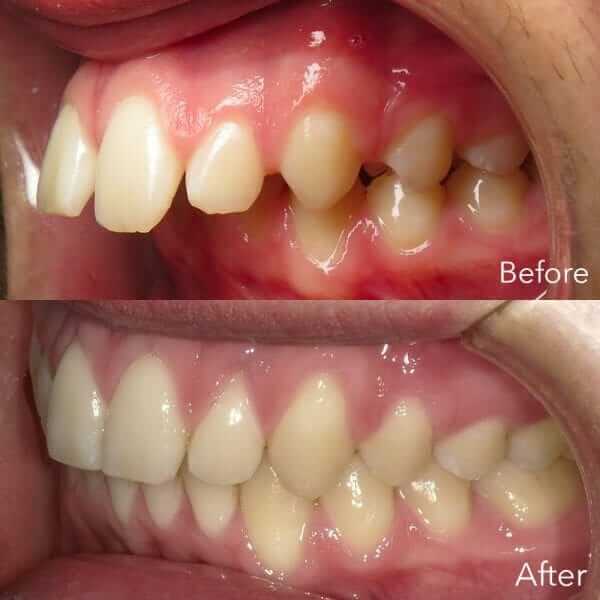
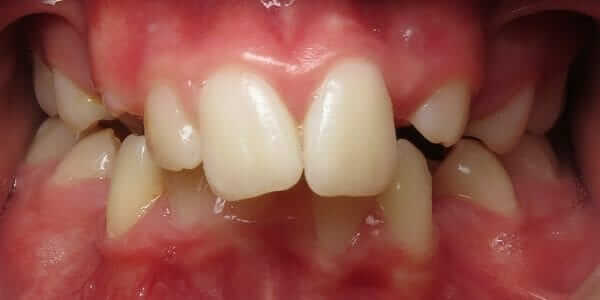
With an overbite, the upper front teeth excessively overlap the lower front teeth in the vertical plane of space. With an overbite, “excessive overlap” means the upper teeth overlap the lower teeth by more than 3 millimeters. The patient is experiencing a vertical misalignment of the teeth with an overbite. To make things more confusing, an overbite can also be called a “deep bite” or a “closed bite.”
Overjet Bite Description
With an overjet bite, the upper teeth often protrude at an outward angle, which causes them to extend in front of the lower teeth. This is a case of horizontal misalignment of the teeth. Another common term for an overjet is “buck teeth.” When looking at overjet pictures, it is easy to see how the upper front teeth sit forward of the lower teeth in the front-to-back plane of space.
Understanding The Difference Between Overjet vs Overbite
The direction of excess overlap (horizontal vs vertical) is what differentiates an overjet vs overbite. With an overbite, the upper teeth vertically overlap the bottom teeth. With an overjet, the upper front teeth protrude forwards of the lower front teeth. To make things more confusing, it is possible for a patient to have an overbite and an overjet at the same time. Regardless of whether a child or teenager has an overjet, overbite, or both, orthodontic treatment is critical.
Problems Caused by a Dental Overjet or Overbite
Now that the differences between overjet vs overbite have been described, it is important to understand the problems that can be caused by these conditions. These issues can be quite serious and contribute to long-term dental problems if not corrected. Ideally, both conditions would be treated earlier rather than later since the treatment is easier in children versus adults.
Overjets and overbites can lead to or be associated with problems such as:
- Speech difficulties (such as a lisp)
- Chewing problems
- Damage to enamel and gums
- Difficulty closing the mouth
- Abnormal appearance of the teeth or face
In addition, overjets can lead to trauma of the upper front teeth, particularly when a patient is playing sports.
Causes of Overjets and Overbites
In many cases, the cause of overbites and/or overjets is a mismatch in shape and size of the jaws and teeth. Skeletal issues such as mismatched jaw sizes or dental issues (such as missing teeth or the abnormal position of the teeth) can lead to these bite problems. Quite often, there is a genetic component to these malocclusions. However, behaviors such as thumb-sucking, tongue thrusting, or pacifier use may also contribute to overjets and overbites.
Treatment Options for Overjet vs Overbite
The treatment options for an overbite and overjet will depend on the severity of the condition, in addition to the patient’s other orthodontic needs. An overjet is typically a bit more challenging to treat than an overbite, but both conditions are usually treatable in most cases.
This American Association of Orthodontists (AAO) recommend children visit an orthodontist by the age of 7. It is around this time that the permanent 6-year molars have erupted, and the bite pattern is established. Not all children will require treatment at this early age. If there is a compelling issue at this time, however, it can be addressed promptly. If not, it is valuable to have a baseline set of records to compare future growth and development. In most cases, ideal timing for overjet and overbite treatment is around the time a child reaches puberty and around the time that the last baby tooth sheds. Although treatment is still possible in adults, it may require more intensive interventions and longer treatment times.
Burke & Redford Orthodontists, located in Temecula and Lake Elsinore, offer a free orthodontic consultation. During this consultation, Dr. Ryan Redford and Dr. Burke provide children, teens, and parents with all the information they need to make an informed choice about the treatment options available.
Orthodontic Appliances for Treating Overjet vs Overbite
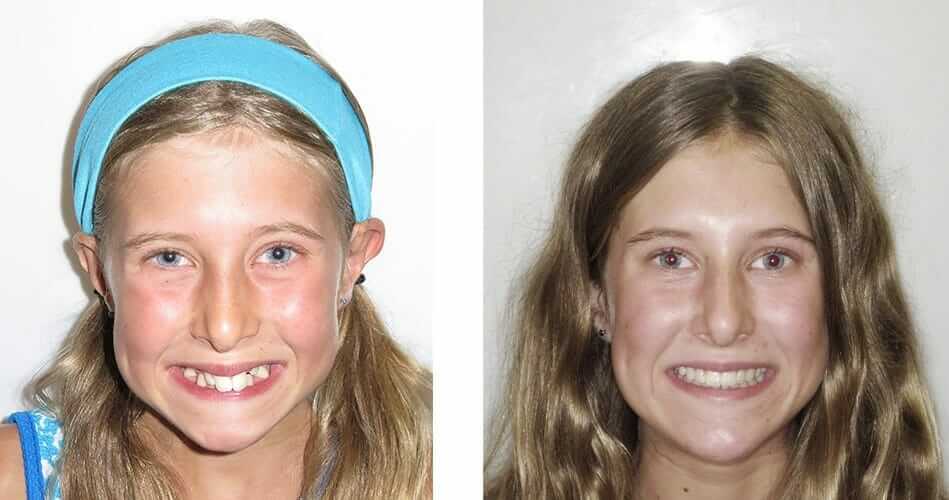
With younger children, there are more treatment options available to fix developing problems. This is called interceptive orthodontics, and it can help younger patients potentially avoid more invasive and expensive orthodontic treatment later in life.
The following orthodontic appliances can be used to treat overjets and overbites in younger patients.
- In younger children, a retainer can be used to tip the upper front teeth back—a fairly cost-efficient way to address tooth positioning issues.
- Herbst appliance. This device is used to correct moderate to severe overjet in younger children whose jaw is still developing. The appliance is a fixed brace that is used to position and hold the lower jaw forward. Typically worn for 6 to 8 months, this appliance is a more discreet alternative to traditional headgear and does not rely on a child’s compliance.
- Carriere Distalizer. This device is used to correct mild to moderate overbites by shifting the upper teeth back and the lower teeth forward. When made with clear materials and elastics, this device is virtually invisible. This appliance is typically worn for 6 to 8 months. However, it does require a child or teenager’s compliance and cooperation to be effective.
Using Braces To Treat Overjets and Overbites
Braces are a common treatment option for overjets, overbites, and other orthodontic issues. Suitable for all ages, braces can correct severe bite issues and are affordable with payment options and no interest through our office. Dr. Redford and Dr. Burke offer patients of all ages a variety of braces options, as described below.
Our office uses a self-ligating braces system. The term self-ligating simply refers to a specialized bracket design that eliminates the need for the elastic ties (used in traditional braces systems) to hold the wire to the braces. Instead, there is a door or clip mechanism that secures the wire in place. There are a variety of self-ligating braces systems—including Damon and In-Ovation. If you’ve just moved to our area from out of town and already have braces, our office can sometimes work with what you have in place. The self-ligating braces offered by our office include:
- Self-ligating metal braces, which use metal for the brackets and archwires.
- Self-ligating ceramic braces, which use tooth-colored ceramic braces and white archwires to provide a more discreet look for adults and teens.
- Self-ligating Damon braces are simply a specific type of self-ligating braces. They are available in metal and clear options.

Using Invisalign To Treat Overjets and Overbites
Invisalign uses a series of clear trays (called aligners) that fit over the teeth and help move them to the correct position. Invisalign can be used for a variety of problems but does have some limitations. The primary advantages of Invisalign are that they appear nearly invisible when in the mouth and can be removed for eating, brushing, and flossing. For the best results, the trays need to be worn at least 22 hours a day.
Surgery to Treat Overjets and Overbites
Orthognathic surgery is the medical term for corrective jaw surgery and is usually the last resort when treating severe bite issues. In cases where the bite problems are severe, it may be the only option to achieve an ideal bite. Because this type of surgery is expensive and complicated, addressing bite issues during childhood or early adolescence is advised. Early intervention can decrease the chances of surgery being needed later.
To schedule a free consultation with Burke & Redford Orthodontists in Temecula or Lake Elsinore, call our main office at (951) 699-8011 or fill out our online consultation request form on our website.